
Jun
18
Wed

“Yiddish and Pennsylvania Dutch”
Today, about one-half of the world’s approximately 7,000 languages are in danger of losing their native speakers. However, a small number of languages associated with highly traditional Jewish and Christian groups are resisting the pressure of linguistic assimilation and are thriving. The two most widely spoken of these exceptional languages are, coincidentally, historically related to one another: Yiddish and Pennsylvania Dutch. In this presentation we will explore the success of Yiddish and Pennsylvania Dutch, which is connected to the demographic health of their main speaker populations, the Hasidim and the Amish.
Mark L. Louden is the Director of the Max Kade Institute for German American Studies, and an affiliate faculty member in the Mosse/Center for Jewish Studies at the University of Wisconsin-Madison. He received his undergraduate and graduate education at Cornell University. Professor Louden taught for 12 years at the University of Texas at Austin before joining the UW-Madison faculty in 2000. His research focuses mainly on heritage Germanic languages spoken in North America, especially Pennsylvania Dutch and Yiddish. He serves as a medical and legal interpreter, cultural mediator, and patient navigator for Amish and traditional Mennonites.
10:30-10:50 – Check-in
11:00-12:30 – Program
12:30-1:30 – Lunch
Menu: Caesar Salad, assorted Artisan Rolls and Mini Muffins. Choice of entrée: Pesto Crusted Sea Bass or Roasted Vegetable Napoleon, White and Wild Rice Blend, Steamed Asparagus Dessert: Tiramisu
Register by phone at 608-442-4081, or via mail / in-person at Jewish Social Services, 6300 Enterprise Lane, #309, Madison, WI 53719. You can print out the registration form here: Levy Registration Form
Jul
1
Tue

“How Jewish Wisdom Can Help Us Grow Older, Better”
The Jewish tradition is filled with practical wisdom that can help us age with more hope, resilience, and good humor. In this conversation, Holocaust scholar and certified life coach Rachel Baum shares three wise voices from different time periods of Jewish life. How can these voices be put to use today in giving us inspiration in creating a life of intention and joy? What are some essential tools for overcoming obstacles in this pursuit?
Rachel teaches courses on the Holocaust and American Jewish culture. She is also a certified life coach and host of the podcast, Making Midlife Magic, where she offers weekly insights on how to create a life of joy and meaning.
10:30-10:50 – Check-in
11:00-12:30 – Program
12:30-1:30 – Lunch
Lunch: Cream of Asparagus Soup, Assorted Artisan Rolls and Mini Muffins. Choice of entrée: Atlantic Salmon stuffed with Shiitake Mushrooms and Spinach, Wild Mushroom Cream Sauce or Tofu Poke Bowl with Veggies, Ginger Soy Sauce, and Sesame Seeds Honey Glazed Carrots, Dauphinoise Potatoes Dessert: Mango Sorbet with Pirouline Cookie
Register by phone at 608-442-4081, or via mail / in-person at Jewish Social Services, 6300 Enterprise Lane, #309, Madison, WI 53719. You can print out the registration form here: Levy Registration Form
Jul
22
Tue

“New Beginnings: Contemporary Re-Readings of the Genesis Narratives”
The creation stories in Genesis are foundational to our narrative as Jews in the world. They have been mined for meaning throughout the generations – each generation uncovering new layers that speak to their moment. Contemporary voices continue this practice. We will explore cartoonist Liana Finck’s graphic novel of Genesis and also Midrash written in recent years by Israeli women. What is novel in their interpretations? What new possibilities do they uncover? We will open such questions as: why keep returning to these narratives? How can these stories inform our relationship to the messy, ever-changing world that we inhabit?
Prior to her work at UW Hillel, Rabbi Judy spent a summer serving as rabbi of Moses Montefiore Congregation in Appleton, Wisconsin. Previously, she taught Jewish studies at Rochelle Zell Jewish High School in the Chicago suburbs. Judy was ordained at the Jewish Theological Seminary, where she also received a master’s degree in Midrash. She has a BA from Harvard College. Judy loves reading and baking, but you can most often find her knitting. This week Judy and her family celebrate seven years of living in Madison.
10:30-10:50 – Check-in
11:00-12:30 – Program
12:30-1:30 – Lunch
Lunch: Vegetable Barley Soup, assorted Artisan Rolls and Mini Muffins. Choice of entrée: Baked Tilapia With Cucumber and Red Pepper Relish or Portabella Fettucine, Roasted Red Potatoes, Vegetable Medley. Dessert: Turtle Sundae
Register by phone at 608-442-4081, or via mail / in-person at Jewish Social Services, 6300 Enterprise Lane, #309, Madison, WI 53719. You can print out the registration form here: Levy Registration Form
Aug
6
Wed

“The Jews of Summer: Summer Camp and Jewish Culture in Postwar America”
In the decades directly following the Holocaust, Jewish leaders anxiously debated how to preserve and produce what they considered authentic Jewish culture, fearful that upward mobility and suburbanization threatened the integrity of Jewish life in America. Many communal educators and rabbis contended that without intervention, Judaism as they understood it would disappear altogether. In their searches for solutions, postwar Jews came to see residential summer camps as panaceas to their communal ills, constructing their programs with an eye towards collective transformation.
(Note: Professor Sandra Fox will be joining us via Zoom for this talk)
Sandra Fox is the Rifkind Chair in American Jewish History at the Jewish Theological Seminary. Professor Fox received her doctorate from New York University’s joint History and Hebrew Judaic Studies program in 2018. In addition to her research, Sandra is the founder and executive producer of the Yiddish-language podcast Vaybertaytsh: A Feminist Podcast in Yiddish, and is on the editorial board of In geveb: A Journal of Yiddish Studies. She is director of the Archive of the American Jewish Left in the Digital Age. Her research interests include American Jewish history, the history of youth and childhood, Yiddish culture, and the history of sexuality. Sandra will be discussing her book, The Jews of Summer: Summer Camp and Jewish Culture in Postwar America (Stanford University Press: 2023).
10:30-10:50 – Check-in
11:00-12:30 – Program
12:30-1:30 – Lunch
Lunch: Caprese Salad, assorted Artisan Rolls and Mini Muffins. Choice of entrée: Pan-fried Walleye with Panko Breadcrumb or Sun-dried Tomato and Asparagus Quiche in Puff Pastry, Garlic Whipped Potatoes, Stir Fry Vegetables. Dessert: Door County Cherry Pie á la Mode
Register by phone at 608-442-4081, or via mail / in-person at Jewish Social Services, 6300 Enterprise Lane, #309, Madison, WI 53719. You can print out the registration form here: Levy Registration Form
Aug
20
Wed

“What is Happening in Our Schools? Anti-Semitic Assignments and Empowering Students to Speak Up”
A chance meeting at a bookstore in upstate New York propelled author Liza Wiemer to write The Assignment, which explores how two brave teens found the courage to speak up against antisemitism and hatred. Join us for a powerful presentation about the real-life assignment, the behind-the-scenes details, the fascinating World War II research, including the Fort Ontario Emergency Refugee Center in Oswego, New York, and the impact on students across the globe.
Liza Wiemer’s second novel, The Assignment, was published by Delacorte Press and has received 12 honors, including being named a Sydney Taylor Notable Book. To date, The Assignment has also been translated to Russian, Polish, Italian, and Korean and has been optioned for film. In addition, Liza has had two adult nonfiction books published and several short stories included in the New York Times bestselling Small Miracles series. Since August 2020, she has presented over 650 talks and workshops across the globe. Her debut picture book, Out and About: A Tale of Giving, was published in August 2023. Every month, she writes a children’s book review column for the Wisconsin Jewish Chronicle. Liza received the honor of being named one of “The Top 100 People Positively Influencing Jewish Life, 2021” by the Algemeiner. A graduate of UW-Madison, Liza has two married sons and lives in Milwaukee, Wisconsin, with her husband, Jim.
10:30-10:50 – Check-in
11:00-12:30 – Program
12:30-1:30 – Lunch
Lunch: Seasonal Fruit Plate, assorted Artisan Rolls and Mini Muffins. Choice of entrée: Mahi-Mahi with Toasted Kale Buerre Blanc or Stuffed Portabella Mushroom, Au Gratin Potatoes, Roasted Root Vegetables. Dessert: Assorted Cookies and Bars
Register by phone at 608-442-4081, or via mail / in-person at Jewish Social Services, 6300 Enterprise Lane, #309, Madison, WI 53719. You can print out the registration form here: Levy Registration Form
Jun
9
Tue
Register by phone at 608-442-4081, or via mail / in-person at Jewish Social Services, 6300 Enterprise Lane, #309, Madison, WI 53719. The program costs $30 per person. You can print out the registration form here: Levy Registration Form
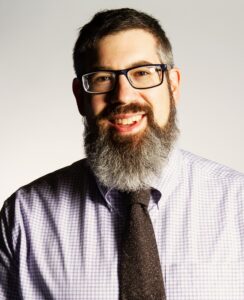
Jordan Rosenblum, Belzer Professor of Classical Judaism and Director of Religious Studies at UW-Madison
His most recent book, Forbidden: A 3,000-Year History of Jews and the Pig (New York University Press, 2024), won a 2024 National Jewish Book Award. According to The Wall Street Journal, “ ‘Forbidden’ is an engaging and surprisingly cheerful study of that odd couple of the religious imagination, the Jew and the pig.” In addition, he is the author of Rabbinic Drinking: What Beverages Teach Us About Rabbinic Literature (University of California Press, 2020); The Jewish Dietary Laws in the Ancient World (Cambridge University Press, 2016); and Food and Identity in Early Rabbinic Judaism (Cambridge University Press, 2010). He is also the co-editor of four volumes, including Feasting and Fasting: The History and Ethics of Jewish Food (New York University Press, 2019); and Animals and the Law in Antiquity (Brown Judaic Studies, 2021).
“Forbidden: A 3,000-Year History of Jews and the Pig”
Jews do not eat pig. This (not always true) observation has been made by both Jews and non-Jews for 3,000 years. Over time, the pig becomes a popular metaphor for Jewish/non-Jewish identity. This talk explores this historical development. Starting in the Hebrew Bible, where the pig is tabooed (but not necessarily singled out more than other food prohibitions), we see the emergence of the pig as a symbol of Jewish identity in the Second Temple period and beyond. From the pages of the Talmud to the pages of The Forward, we follow the pig as it forages through Jewish history.
Lunch: Nakoma Golf Salad with Balsamic Vinaigrette, assorted Artisan Rolls and Mini Muffins choice of entrée: Atlantic Salmon stuffed with Shiitake Mushrooms and Spinach, Wild Mushroom Cream Sauce or Vegan Sweet Potato Curry (mild), Barley Pilaf, French Beans, and Baby Carrots
Dessert: Tiramisu
Jun
24
Wed
Register by phone at 608-442-4081, or via mail / in-person at Jewish Social Services, 6300 Enterprise Lane, #309, Madison, WI 53719. The program costs $30 per person. You can print out the registration form here: Levy Registration Form
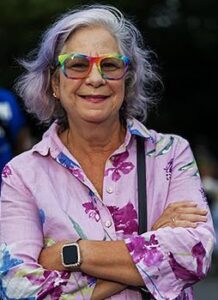
Rabbi Paula Winnig, Union of Reform Judaism’s Director of Congregational Consulting and Transition Services: “Revolutionary changes is Jewish life: How the changing roles of women in Judaism has changed the world”
A proud “badger by birth,” and UW-Madison Alum, Rabbi Winnig grew up at Mt. Sinai Congregation in Wausau, Wisconsin. She was ordained 40 years ago at Hebrew Union College-Jewish Institute of Religion, beginning a rabbinic journey that has taken her to congregations across North America as well as Guatemala and New Zealand before returning to Wisconsin in 2017. In addition to her 26 years in congregational life, Rabbi Winnig earned an MBA and has led a variety of Jewish organizations. She’s also a proud mother and savta (grandmother). When she is not working, you may find her biking, traveling, cooking, or creating beautiful fiber art. She also loves kayaking on the beautiful lakes surrounding Madison.
“Revolutionary Changes in Jewish Life: How the Changing Roles of Women in Judaism has Changed the World”
Rabbi Winnig will discuss how organizations such as synagogue sisterhoods and the ordination of women rabbis and cantors have opened the door to revolutionary changes in Jewish practice, theology, and influence in the world.
Lunch: Caesar Salad, assorted Artisan Rolls and Mini Muffins choice of entrée: Pan-Fried Walleye with Panko Breadcrumbs or Sun-Dried Tomato and Asparagus Quiche in Puff Pastry, Garlic Whipped Potatoes, Stir Fry Vegetables
Dessert: Door County Cherry Pie a la Mode
Jul
8
Wed
Register by phone at 608-442-4081, or via mail / in-person at Jewish Social Services, 6300 Enterprise Lane, #309, Madison, WI 53719. The program costs $30 per person. You can print out the registration form here: Levy Registration Form
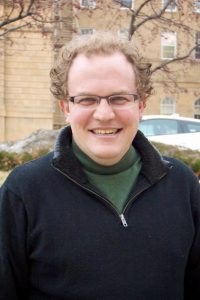
Jonathan Pollack, Writer in Residence at the Mosse/Weinstein Center for Jewish Studies at UW—Madison Jonathan is currently revising and updating his 2019 book, Wisconsin, The New Home of the Jew. At UW, he previously held honorary fellowships in Center for Jewish Studies from 2012-2025, and at UW’s Institute for Research in the Humanities from 2007–2012. Last year, he retired from a 27-year career teaching history at Madison Area Technical College.
“Jewish Athletes and Coaches at the University of Wisconsin, 1896–1918: Ways to be Jewish on Campus”
What was it like to be Jewish at UW-Madison at the turn of the last century? Jewish athletes, coaches, and physical-education professors can illustrate the range of possibilities, from keeping one’s background a secret to participating in the Menorah Society. Jonathan’s talk will highlight the lives of football and baseball coach Phil King, baseball player/coach M. Gordon “Slim” Lewis, trainer Ike Bernstein, field hockey and baseball player Belle Fliegelman, physical- education professor Blanche Trilling, and baseball player Sohnia Sinaiko.
Lunch: Cream of Asparagus Soup, assorted Artisan Rolls and Mini Muffins choice of entrée: Whitefish with Caper Picatta or Stuffed Portabella Mushroom, Bi-Color Baby Carrots, Dauphinoise Potatoes Dessert: Dark Chocolate Ganache Three-Layer Cake
Jul
29
Wed
Register by phone at 608-442-4081, or via mail / in-person at Jewish Social Services, 6300 Enterprise Lane, #309, Madison, WI 53719. The program costs $30 per person. You can print out the registration form here: Levy Registration Form
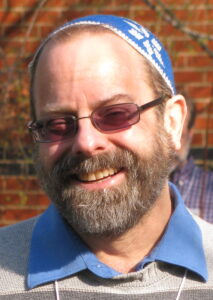
Rabbi Daniel Swartz, Spiritual leader of Temple Hesed, Scranton, PA; Executive Director of the Coalition on the Environment and Jewish Life (COEJL)
Rabbi Swartz helped found the COEJL in 1993. For the past 35 years, he has been engaged in national and international faith-led efforts to promote environmental justice and combat climate change, including working with Pope Francis and helping to convene the global Women Faith Climate Network. Rabbi Swartz has also held leadership positions with Pennsylvania Interfaith Power and Light, Greater Washington IPL, the National Religious Partnership for the Environment, the Children’s Environmental Health Network, and the Religious Action Center of Reform Judaism.
“Climate Justice – Stories of Hope and Action”
Using his own experience with faith-based environmental gatherings from the Vatican to synagogue “green groups,” Rabbi Swartz will help us understand the faith and justice dimensions of the climate crisis. Drawing on generations of Jewish teachings, he will illustrate why it is so important that the Jewish community plays a role in solving this crisis. He will also address actions that each of us can take in our own lives, as well as efforts in which we can join together.
Lunch: Quinoa and Spinach Salad, assorted Artisan Rolls and Mini Muffins choice of entrée: Mahi Mahi with Toasted Kale Beurre Blanc or Angel Hair Pasta with Asparagus, Basil, Garlic Plum Tomato Sauce and Cheese, Roasted Red Potatoes, Vegetable Medley
Dessert: Turtle Sundae
Aug
11
Tue
Register by phone at 608-442-4081, or via mail / in-person at Jewish Social Services, 6300 Enterprise Lane, #309, Madison, WI 53719. The program costs $30 per person. You can print out the registration form here: Levy Registration Form
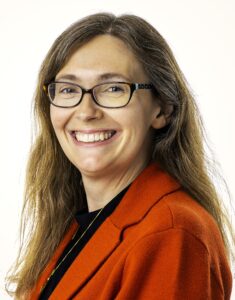
Samantha Abramson, Executive Director, Holocaust Education Resource Center – Milwaukee, WI
Milwaukee native Samantha Abramson holds a Master of Arts degree in Museum Studies from the George Washington University and a Bachelor of Arts degree in History with minors in Jewish Studies, Spanish, and English Literature from the University of Minnesota – Twin Cities. Samantha brings two decades of experience in nonprofits and museums, including the new Capital Jewish Museum, United States Holocaust Memorial Museum, Smithsonian Institution, Jewish Heritage North Carolina, and Jewish Museum Milwaukee. Samantha is a graduate of the Wexner Field Fellowship program for Jewish leaders, and was recently named to the Milwaukee Business Journal’s 40 under 40.
“Bearing Witness Together: Holocaust Education in Wisconsin in 2026”
Did you know that Wisconsin ranks #1 in Holocaust awareness of all 50 U.S. states? Since the unanimous and bipartisan passage of Wisconsin Act 30 by the Wisconsin Legislature in 2021, the Nathan and Esther Pelz Holocaust Education Center has led Holocaust education efforts across our state, partnering with nearly 400 school districts to offer professional development, resources, speakers, and programs. During this conversation, Samantha will share experiences gained and lessons learned on the fifth year of this journey, and explore how the field of Holocaust education continues to evolve to meet the challenges of growing antisemitism and lack of awareness about Jewish identity outside the Holocaust.
Lunch: Grilled Romaine Hearts Salad, assorted Artisan Rolls and Mini Muffins, choice of entrée: Pesto Crusted Sea Bass or Mushroom Risotto, Roasted Vegetables with Toasted Orzo
Dessert: Chocolate Mousse with Fresh Berries